Uchiha Madara, the man who wanted NIRVANA for everyone.
Snehith,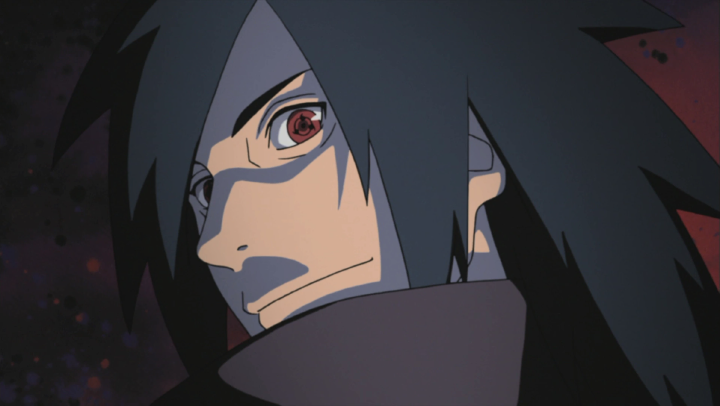
Every Naruto fan knows that Madara was a great shinobi, but very few of us truly understand why he is often considered superior to Hashirama Senju. Madara is a very interesting character—he is a man of action and also an idealist. Understandably, he was a strong contender for the position of Hokage, and it would have been tragic if he had actually become one, which I’ll explain in a bit. What I want to focus on here is why Madara is almost a Buddhist idealist, and how Kishimoto brilliantly executed his ideas through Madara’s actions.
The anime and manga unapologetically revolve around tribes and clans, so it’s understandable that Madara believed he could free people from suffering through power, using concepts that closely resemble Buddhism.
Buddhism, in its abstract sense—much like Hinduism—believes that the world itself is an illusion. According to Buddhism, the world we perceive is shaped by our understanding of suffering and our role within karma.
This might sound strange at first, so let’s consider a parable. Imagine life as a dream. In the dream, you experience joy, pain, love, and fear. No matter when you enter the dream or what role you play, the cycle of emotions continues. Even if you try to escape for a moment, the patterns reappear. Similarly, humans are born, suffer, live, and die. Yet humanity as a whole remains conscious and continues to suffer, regardless of when people are born. Similarly, if you deconstruct everything you are conscious of—from your actions to your thoughts—you may arrive at a sense of nothingness. Because of this, people came to believe that in order to escape life’s misery, one must return to their original state—ignorance, bliss, nothingness, the void.
Madara recognized this pattern—he saw the endless turbulence of human emotion as an illusion and believed that only by stopping the cycle could true peace be achieved and he concluded that all love and hate in the world are products of attachment to illusion, and that attachment itself is the root of suffering.
In real life, people invented yoga as a way to reach NIRVANA. There are many paths one can take, but I believe Kishimoto used Samadhi yoga as the inspiration for Madara’s Infinite Tsukuyomi. Samadhi is the eighth and final step on the path of yoga, as defined in Patanjali’s Yoga Sutras.
Madara created the Infinite Tsukuyomi, which fundamentally puts everyone into a deep sleep and strips them of consciousness. When all thoughts are exhausted—when imagination has played out every possible answer—there is no longer a need for the brain to think. As the Infinite Tsukuyomi paralyzes and sedates the body, after a few days people fall into complete stillness and reach a blank state.
In the end, this is Madara’s version of Buddhist NIRVANA.
I want to conclude by saying that, Madara did not want people to awaken from illusion—he wanted to erase the dreamer.